Independent fingers
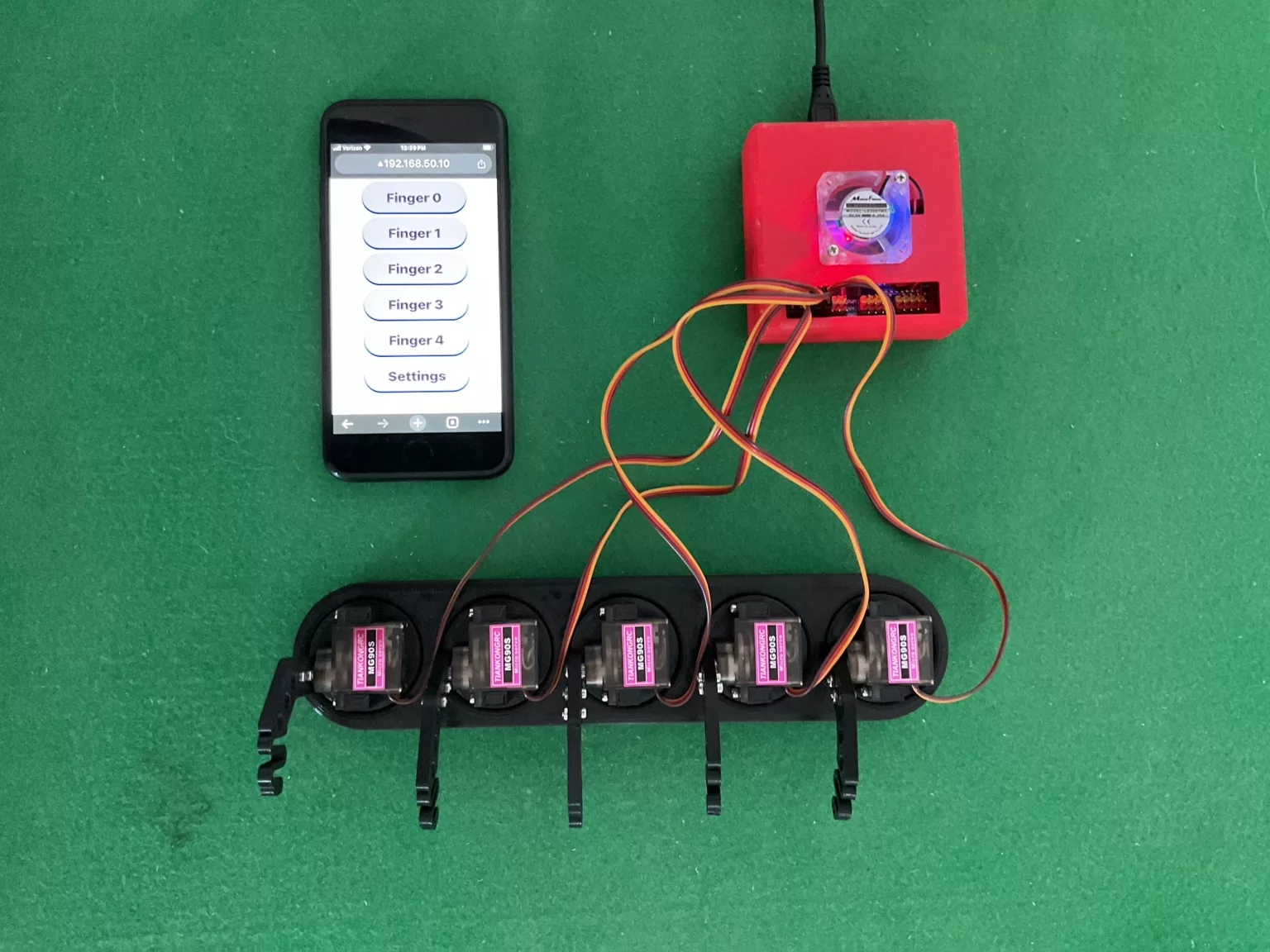
Five servo-driven actuator modules can be positioned and operated independently.
Remote hardware interaction
Remote robotic control for physical equipment.
A network-controlled robotic actuator that allows an engineer, QA tester, or test system to physically press equipment buttons from another location.
The physical interface gap
Remote access works well when equipment provides a software-control interface. But many machines still depend on physical buttons, switches, and operator controls that cannot be activated through conventional remote-desktop or test software.
MA3 Claw bridges that gap. A remote operator or automated test system can command physical actuators positioned directly over the equipment controls.
The original use case was remote QA testing of casino slot machines: an engineer could observe a machine through a camera and press its buttons over the network. The same concept can extend to other equipment with physical controls.
How it works
Magnetically place the finger modules over the physical buttons that need to be operated.
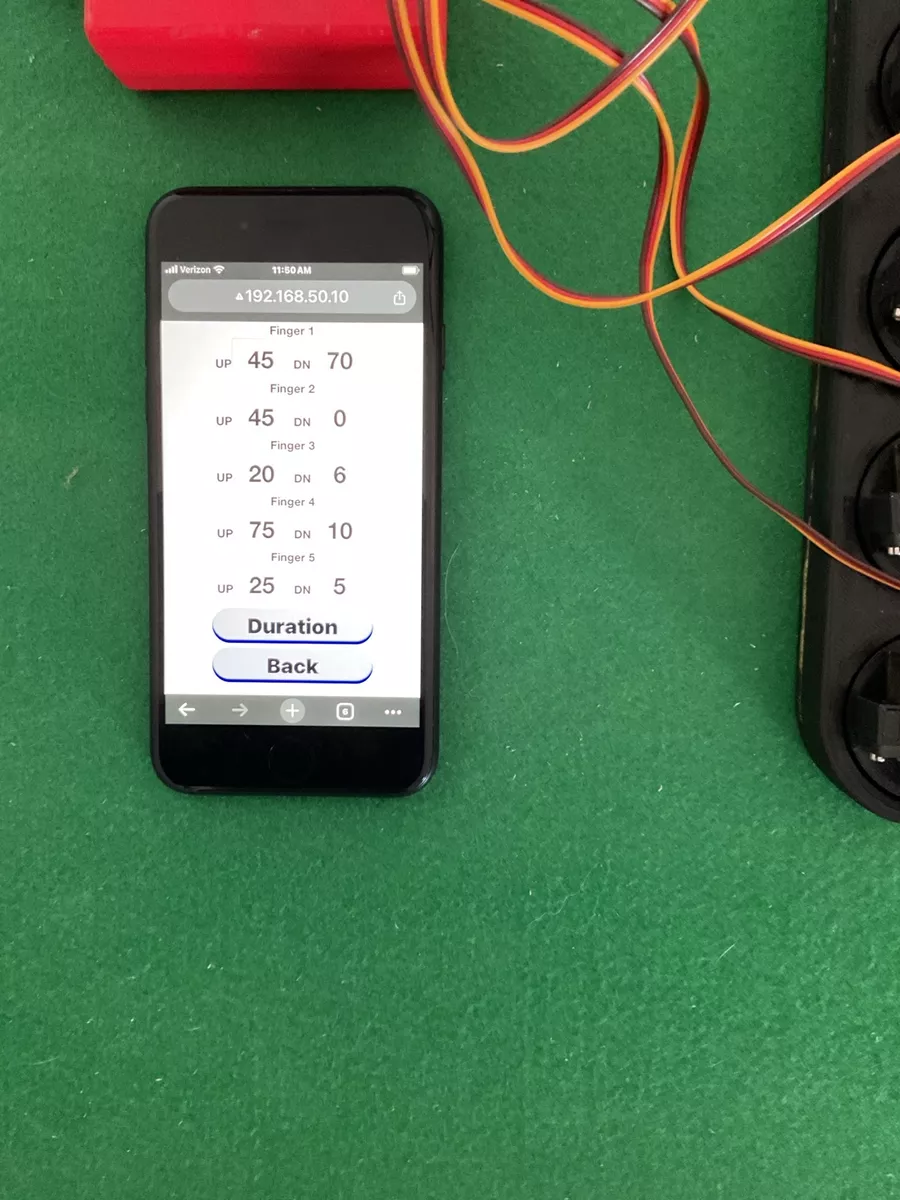
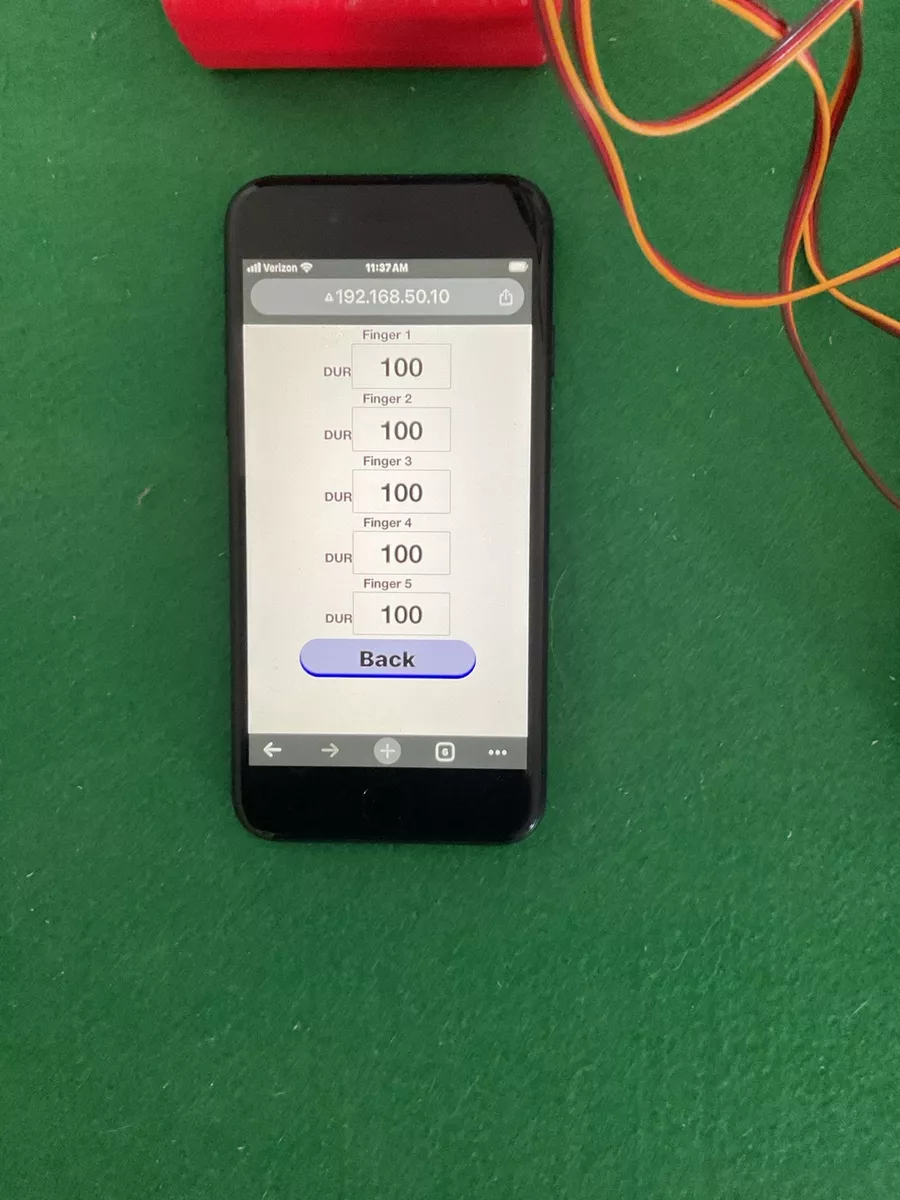
Configure each finger’s raised position, pressed position, and press duration.
View the target equipment through a separate camera or existing remote-video system.
Press individual controls remotely from the browser or a connected software interface.
System capabilities
Five servo-driven actuator modules can be positioned and operated independently.
Each mechanical finger flexes at contact to protect servo gears and tolerate button-height differences.
Magnetic bases allow fast positioning on compatible metal equipment without permanent modification.
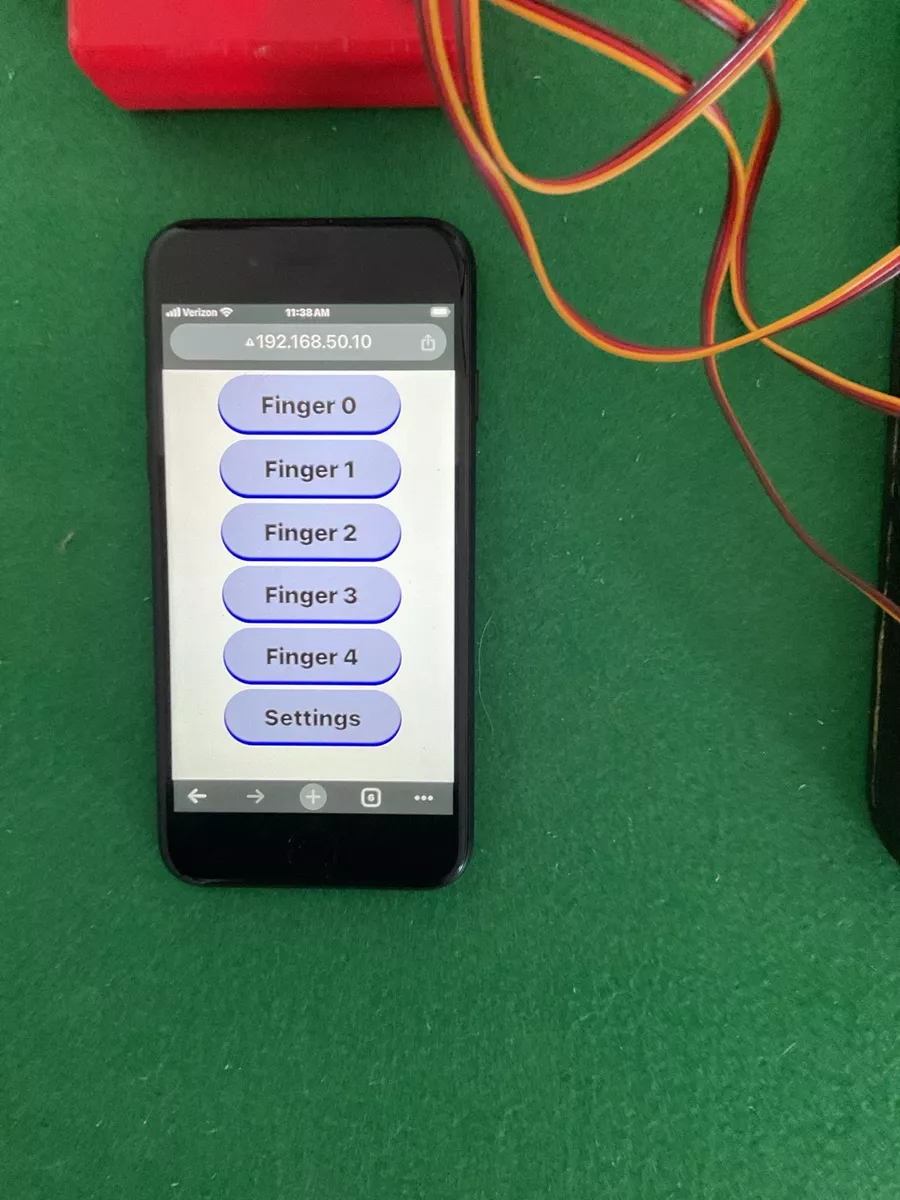
Operate the controller from a phone, tablet, or computer through a standard browser interface.
Configure the raised and pressed positions independently for every actuator.
Set how long each finger holds a physical control before returning to its raised position.
Connect remote operators or test software to physical controls over a network.
Basic operation uses the browser, eliminating dedicated client-software installation.
Modular actuator
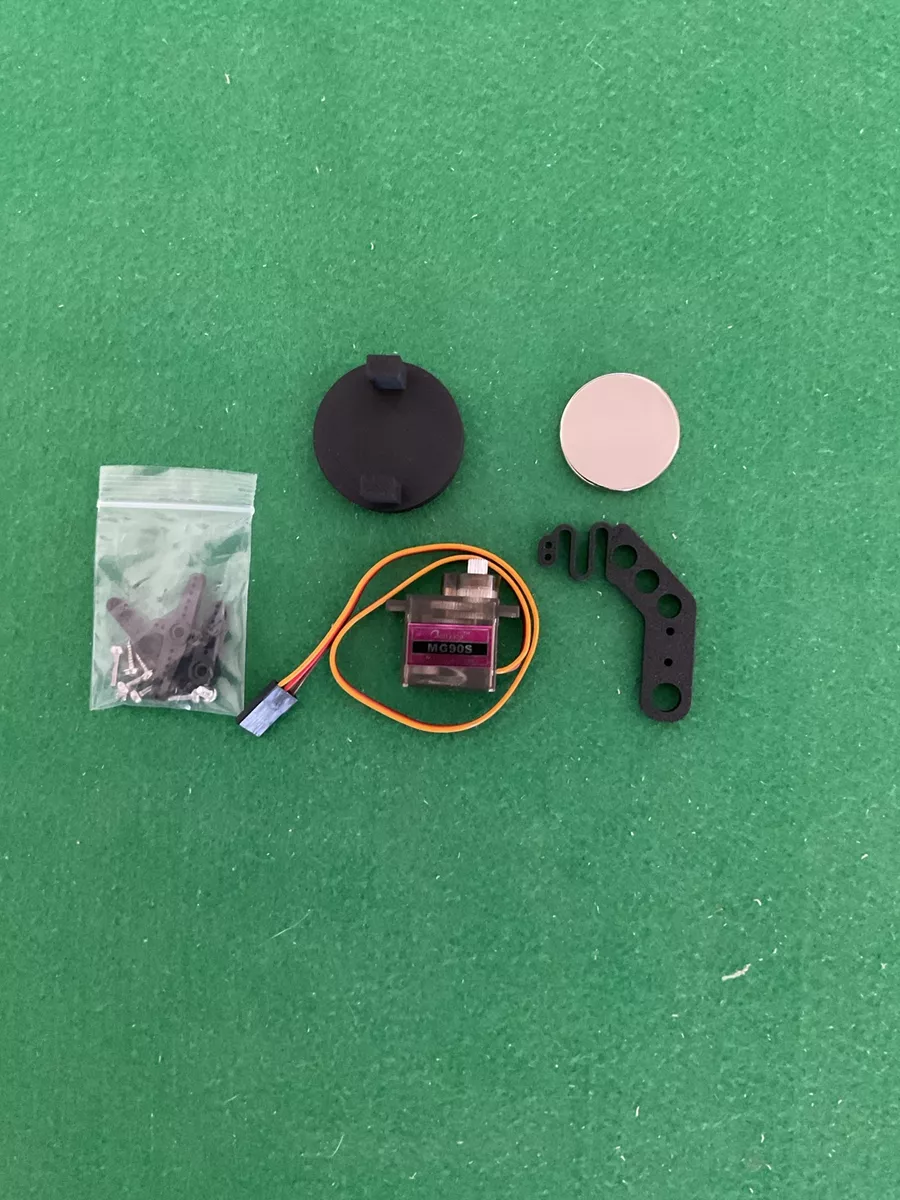
The modular building block behind the MA3 Claw system.
Each kit contains a micro servo, compliant finger mechanism, magnetic mounting base, magnet, servo horn, and assembly hardware.
The compliant finger provides mechanical forgiveness during button presses, helping reduce shock loads on the servo gears. The magnetic mounting base allows each finger to be positioned independently on a steel machine cabinet or control surface.
Finger modules can be used individually or combined into custom one-, two-, three-, five-, or multi-finger actuator arrays.
Technical architecture
Prototype gallery
The images document the current functional prototype rather than finished production hardware.
Potential applications
Development status
MA3 Claw is a working MA3 Engineering prototype currently being evaluated for further development. Tell us about the equipment or testing problem you need to solve.